February 23, 2026 – Kansas City Business Journal
At a glance, build-to-rent (BTR) and traditional multi-family developments can look like variations of the same product: residential units, shared amenities, and a similar renter profile. But once a project moves from concept to construction, the similarities fade quickly.
From how a site is planned and utilities are routed to how schedules are sequenced and trades are deployed, BTR and conventional multi-family demand very different construction approaches. Understanding those differences early — before design is finalized, or budgets are locked in — can be the difference between a smooth build and costly surprises.
Understanding the Living Model Behind Each Development Type
One of the most common misconceptions about build-to-rent versus traditional multi-family is that they’re fundamentally the same product delivered in different formats. While both often serve similar renter demographics, the living experience each model delivers — and the expectations that come with it — are different.
Multi-family is typically defined by higher-density, vertically stacked units, shared building systems, and centralized amenities. Efficiency is driven by scale within a single structure, with design and construction decisions optimized around stacking, shared infrastructure, and operational consistency.
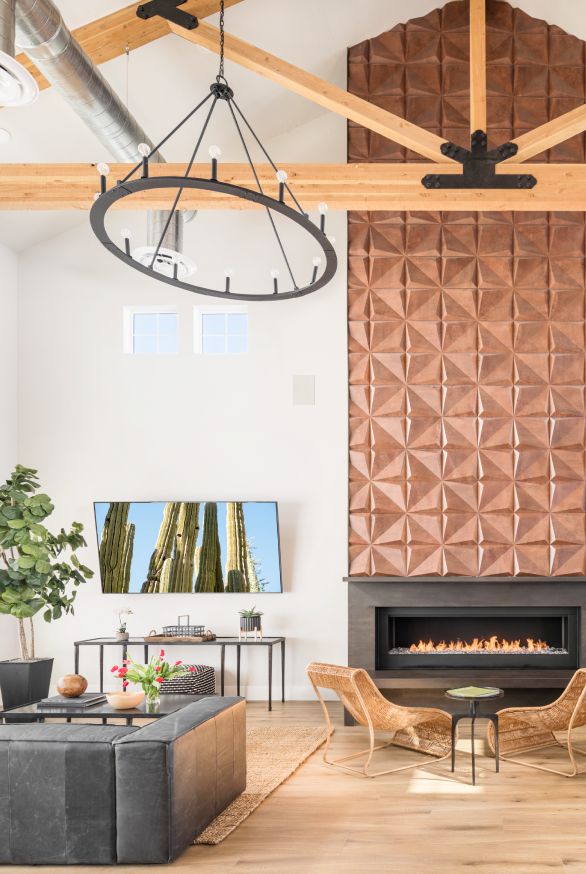
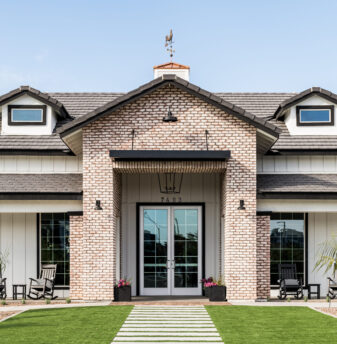
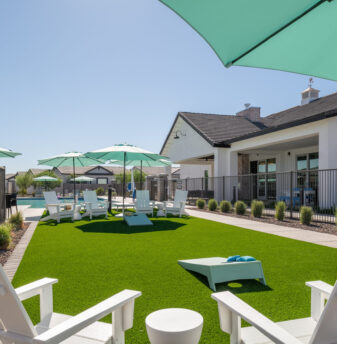
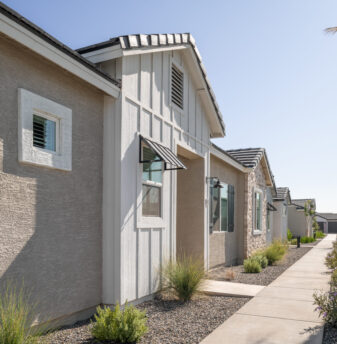
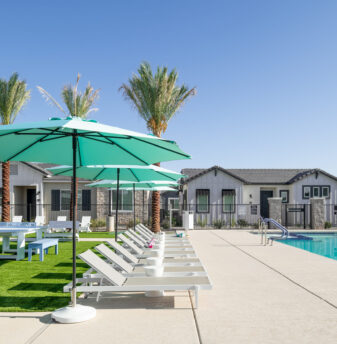
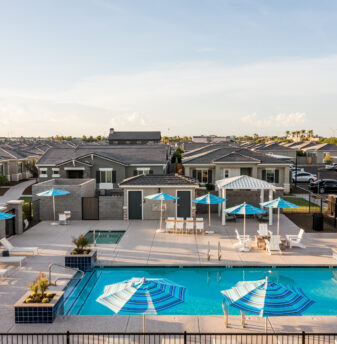
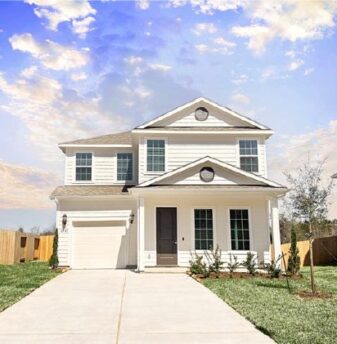
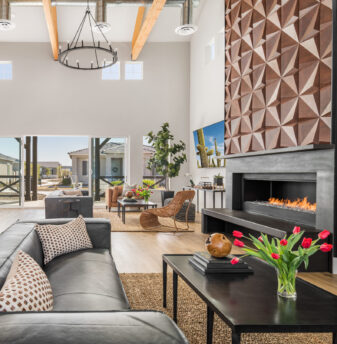
Build-to-rent, on the other hand, delivers the privacy and feel of single-family living — often with yards, private entrances and garages — while maintaining the lifestyle appeal of a professionally managed community. Amenities like clubhouses, pools, dog parks, fitness centers and even pickleball courts remain central, but are distributed across a much larger footprint.
These differences aren’t just aesthetic. They reflect shifting renter preferences and directly influence how a project must be planned and built. According to the National Renter Demand Indexing study, 46% of prospective renters are willing to increase their rent budgets to secure larger spaces and premium amenities. As long-term renting becomes more common, BTR communities are filling the gap of the “missing middle” and continue to meet demand for space, flexibility, and lifestyle — without the commitment of homeownership.
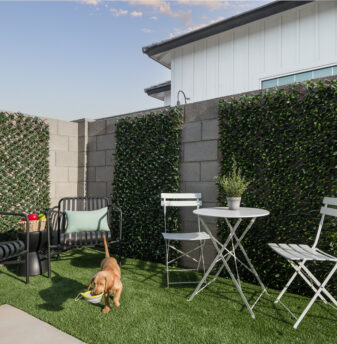
The reality is that renters want more options. Will they pay more rent for a clubhouse, dog park, pool, or shared amenities? The answer is usually yes. The same holds true for renting a home or cottage with the desired amenities and a yard. Cavan Companies, an Arizona-based build-to-rent real estate developer, has found what matters most to renters is privacy and livability. Detached, single-story homes with private outdoor space consistently resonate. People want quiet. They want open plans, natural light, and high ceilings. They want the ability to have a dog and a backyard. Amenities support the experience, but the home itself drives the decision.
So, when does build-to-rent make the most sense?
“We evaluate market fit for BTR based on fundamentals — not momentum,” Cavan explains. “We look for steady job growth, household formation, reasonable rent-to-income ratios, and a meaningful spread between the cost of buying a home and renting one of ours. If a resident can rent a detached home for significantly less than owning in the same submarket, the model has room to work. Land pricing is also critical. If land forces high-density apartments as the only viable housing alternative, the lifestyle our residents are seeking becomes unattainable.”
Design and Site Planning: Vertical Efficiency vs Horizontal Complexity
The most significant construction differences between BTR and traditional multi-family appear long before vertical construction begins — at the site planning level.
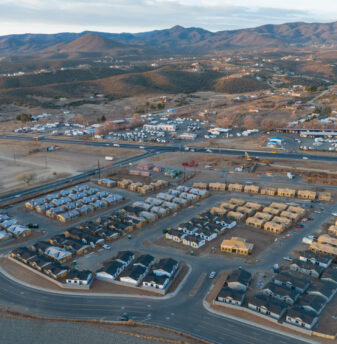
“With multi-family, you’re building upward. You might have 42 units in one building,” Rod Ritenour, Preconstruction Director at Ronco explains. “In a BTR community, you’re building 42 independent units. The reality is the site fills up much faster and you usually don’t have the same space for staging or storage.”
Traditional multi-family developments concentrate density vertically. Site planning is often driven by building placement, access points, and centralized infrastructure serving a limited number of structures. Construction logistics are contained, and efficiencies come from stacking systems within a single footprint.
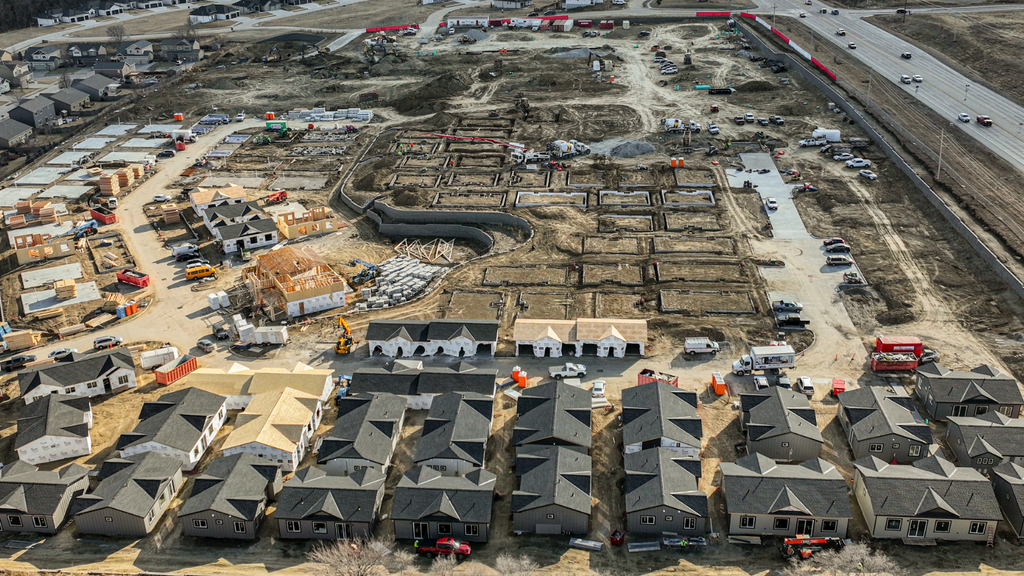
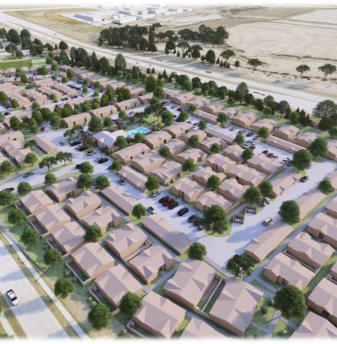
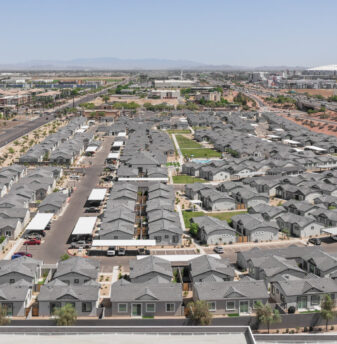
Build-to-rent communities shift that complexity outward. Larger parcels of land are required, increasing exposure to grading challenges, stormwater management, underground utilities, roadways, fencing, and landscaping. Once construction starts, the larger footprint impacts travel time between types to manage trades, security, and general supervision of the site. With more surface area and more touchpoints, coordination becomes critical early in design.
“If you have four multi-family buildings with 50 units each, you need to understand elevation and water shedding for four buildings,” says Ritenour. “In a BTR community with 200 units, you need to understand elevation and water shedding for every unit — and how it affects the unit ten feet away.”
Vertical construction, however, is often simpler in BTR. “Most BTR buildings are one to three stories, so you’re eliminating high-rise elements like elevators, post-tension slabs and extensive fire-rated shafts that are common in multi-family construction,” adds Creighton Westesen, an Assistant Project Manager at Ronco.
Amenity planning also reflects this shift. In traditional multi-family projects, amenities are typically centralized within a single structure. In BTR communities, amenities are distributed across the site, requiring developers to think holistically about walkability, visibility, long-term maintenance, and phasing strategies.
Speaking of phasing, one advantage of BTR for developers is the flexibility of phased leasing. BTR communities can often lease completed units incrementally while construction continues elsewhere on site — creating earlier revenue opportunities. That flexibility, however, depends on site planning and construction sequencing being aligned with leasing and operations from the very beginning.
The challenge isn’t that one model is more difficult than the other — it’s that risk is concentrated in different places, and successful execution depends on understanding where those pressure points live.
Where BTR and Multi-Family Diverge: Construction Strategy, Schedule and Cost
Construction strategy is where the differences between BTR and traditional multi-family become most apparent in the field.
One of the key efficiencies in build-to-rent construction is repetition. BTR communities typically feature a limited number of floor plans repeated across dozens — or even hundreds — of units. Once initial units are completed and lessons are learned, trade productivity improves and rework decreases.
“Standardizing the floor plan creates a learning curve advantage,” Westesen explains. “Trades increase productivity with each repetition, and design issues are typically worked out early rather than resurfacing throughout the project.”
Traditional multi-family projects, by contrast, rely on vertical efficiency. While there may be fewer unit types, multiple trades are often working simultaneously within the same structure. Congestion, access constraints, and system coordination introduce a different set of scheduling challenges. The strategy isn’t about speed alone — it’s about predictability and sequencing.
Cavan emphasizes that successful BTR projects leverage commercial construction execution with homebuilder subcontractors. A contractor who can optimize a schedule and sequencing to get trades in and out without bumping into each other is often best equipped for this type of project.
Schedule impacts differ as well. While BTR benefits from repeatable designs, projects often take longer overall due to increased sitework, individual foundations, and greater weather exposure. Scheduling is more granular, frequently planned by unit or even by day to maintain momentum across a large site.
Cost structure is another key differentiator. In a traditional multi-family project, major scopes — such as plumbing — are often handled by a single contractor serving an entire building. In a BTR community, those scopes may be divided among multiple trade partners: one plumbing contractor focused on underground infrastructure, others handling vertical rough-ins or specific product types like cottages or townhomes.
This more granular approach allows subcontractors to focus on right-sized scopes, opens opportunities to engage smaller or mid-sized trade partners, and can improve manpower flow and cost control when coordinated effectively. But it also requires careful planning and oversight to maintain consistency across the site.
Choosing the Right Partner Matters
Build-to-rent and traditional multi-family may serve a similar renter market, but the process for design and build is just different. Early decisions made in feasibility, site planning, and preconstruction play a major role in maintaining schedule certainty, managing costs, and optimizing long-term asset performance.
The most successful projects start with a construction partner who understands both models — not just on paper, but in the field. Construction managers, like Ronco Construction, can anticipate challenges, align design with constructability, and collaborate early to reduce risk. In an environment where expectations are high and complexity is constant, that understanding makes the difference.
Ronco Construction is a general contractor and construction services firm delivering complex projects with creativity, integrity, and precision. Since 1976, we believe in building excellence through teamwork — and showing up every day to do the right thing. Ronco is headquartered in Omaha, Nebraska with an office in Kansas City, Missouri.

























 +1 (480) 627 7000