
The Reluctant Landlord
Why Build-to-Rent Is Becoming the 1031 Exit for Aging Private Real Estate
A lot of private real estate wealth has nowhere good to go
Millions of high-net-worth investors hold directly owned real estate they built over decades: small apartment buildings, strip retail, older rentals. The assets appreciated. They also aged. Deferred maintenance stacked up, insurance repriced, and the owners moved past the point where active management fits their lives. For many long-held properties, an outright sale surrenders 25 to 30 percent of gross proceeds to combined federal and state tax, a figure that varies with basis, depreciation recapture, filing status, and state of domicile.
So they hold. Not because holding is the right financial decision, but because every standard exit carries a cost. Selling is expensive. Trading into a comparable building keeps the management problem intact. Delaware Statutory Trusts left a portion of this audience burned. The 721 UPREIT, for all its tax efficiency, remains functionally out of reach for the single-property owner.
“Absorbing operational risk to defer a tax liability is not an investment strategy. It is a trap. This paper is about the way out.”
The math on $1,000,000 of recognized gain
For a long-held property with substantial embedded gain, the tax event on an outright sale can consume a quarter of the proceeds before the investor sees a dollar. A 1031 exchange keeps that capital compounding.
Illustrative. Assumes $800K long-term capital gain + $200K depreciation recapture; 20% LTCG + 3.8% NIIT + 25% recapture; state 5%. Consult a qualified tax advisor.
Why the standard exits are closing
Outright sale. 25 to 30 percent of gross proceeds can go to combined federal and state tax. The longer the hold, the worse the math.
Trading into more of the same. Defers the gain but keeps the midnight maintenance calls. For an investor who is 62 and wants to stop taking them, this is a postponement, not a solution.
Delaware Statutory Trusts. Addressed the management burden but left a portion of this audience with illiquidity, fee drag, and COVID-era distribution disruptions that tempered demand.
The 721 UPREIT. Tax-efficient in theory, functionally unavailable to the single-property owner given institutional minimums and contribution underwriting.
Why Build-to-Rent, in four pillars
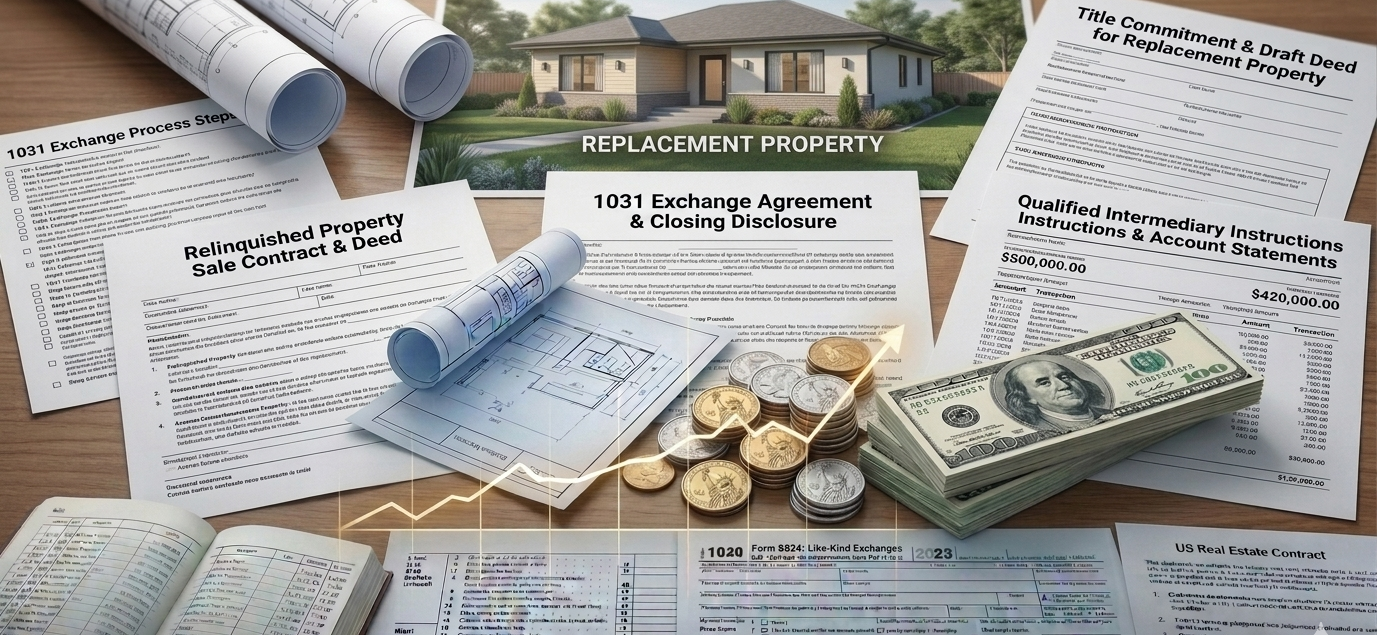
An investor completing a 1031 exchange has a broad range of qualifying replacement properties. The question is not whether build-to-rent qualifies, but whether it is the superior choice for this investor profile. The case rests on four pillars.
Management burden, exited
Institutional operations are the core model, not a service layered on top of ownership. The investor still bears sponsor, occupancy, and illiquidity risk, but the midnight maintenance call belongs to the operator.
Fresh depreciation on new construction
No deferred maintenance on day one. Carried basis keeps its original timeline, but excess basis starts a new 27.5-year schedule, an incremental shield existing-stock alternatives cannot replicate.
Demand that does not track rates
Renters-by-choice and downsizing households in their late fifties and sixties anchor occupancy behaviorally. Neither group is renting for lack of alternatives.
Midwest operating cost stability
Supply-constrained Midwest markets have generally avoided the catastrophic weather exposure driving coastal insurance repricing. Where the replacement property sits shapes income stability.
The execution window is rigid and unforgiving
Section 1031 permits deferral of gain when proceeds are reinvested in like-kind replacement property within a strict statutory window. The mechanics are rigid, and the timing constraints reward advisors who start the conversation early.
An investor who begins exploring options only after accepting an offer has a dangerously narrow window. Advisors who surface this conversation in advance give their clients a materially safer, better-vetted set of options.
A new conversation about old capital
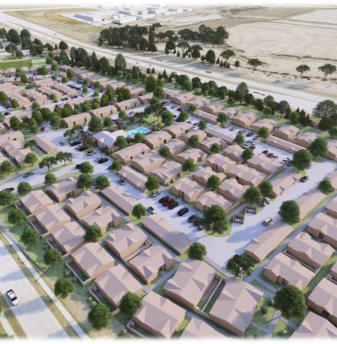
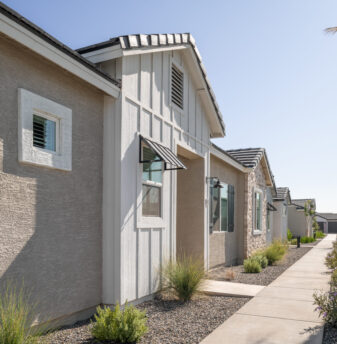
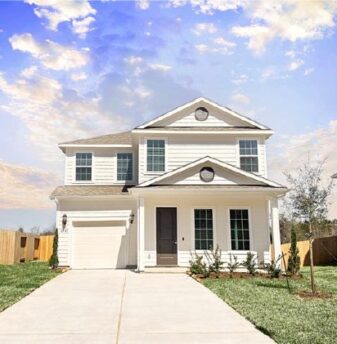
The wealth that built America’s secondary rental housing stock is aging alongside the people who own it. The 1031 exchange has existed since 1921. What is new is the replacement property landscape: build-to-rent at institutional scale, in supply-constrained markets, with professional management and new-construction quality, did not exist as a viable 1031 vehicle in 2005. It does today.
The tax mechanics have been stable since 1984. What changed is the replacement property landscape. For the investor holding a fourplex he cannot figure out how to exit, and for the advisors who serve him, this conversation is worth having before the next maintenance call. The investors and advisors who understand this structure now are in the best position to act when the timing is right.
Executive Summary
Free · No form required · 2 pages
The full paper covers the aging private real estate stock, the four closing exits in detail, how the capital moves through Direct Fractional, TIC, and Fund structures, the four-pillar case for build-to-rent, and the planner’s perspective on timing and fiduciary guardrails.
✓ Shared only with Cavan Companies. Never sold or distributed to third parties.
For informational purposes only. Not investment, legal, or tax advice. All projections are illustrative; individual tax outcomes vary. Cavan Companies is an active developer and operator of purpose-built BTR communities; readers should consider this operating interest when evaluating the observations presented. Investors should consult their own qualified advisors before making any investment decision. Under SEC Rule 506(c), all investors must be verified accredited investors.




































 +1 (480) 627 7000